Practical guidance for preparing recordings, choosing transcript formats, and using transcripts in your work.
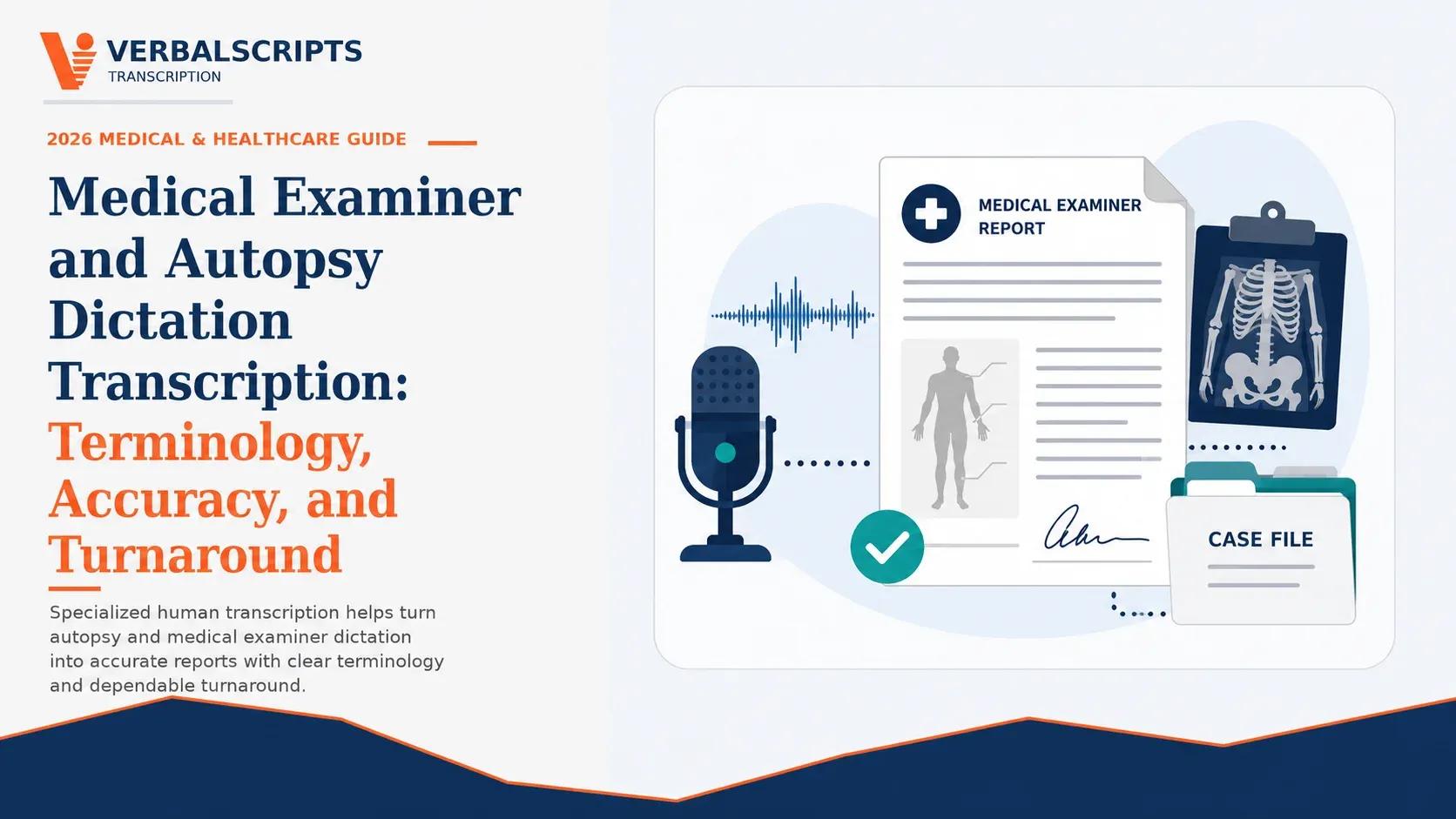
A 2026 guide to medical examiner and autopsy dictation transcription covering terminology, measurements, templates, turnaround, privacy, security, and human QA.
Doctor-patient conversation transcription creates a written record of a clinical encounter, interview, consultation, or patient-experience…
Medical-legal transcription converts recordings and dictation that combine clinical facts with legal issues into structured documents. Injury…
Independent medical examination transcription converts an examiner’s dictated findings, history, observations, testing, records review, and…
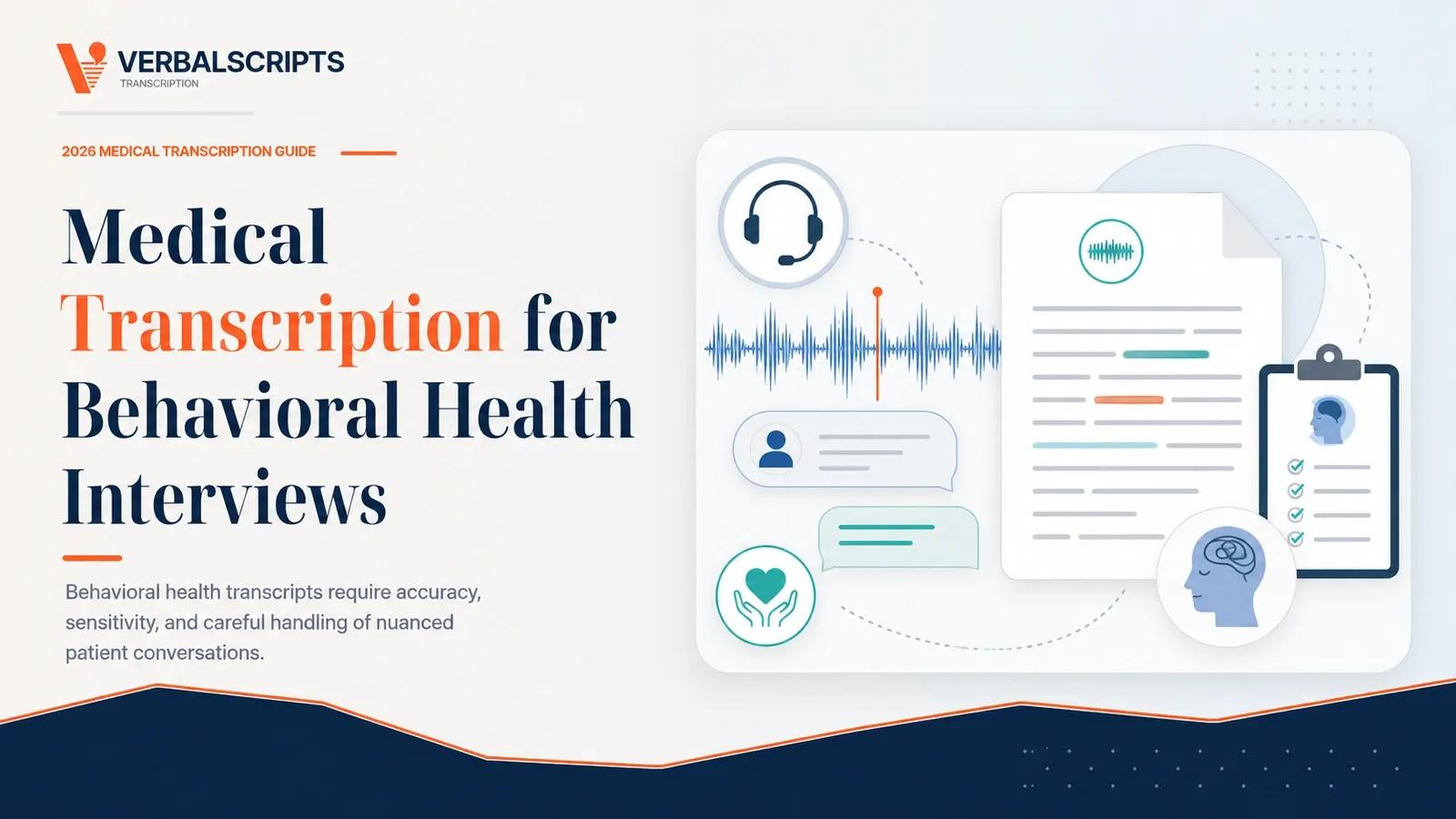
A guide to behavioral-health interview transcription covering sensitive language, speaker labels, nonverbal cues, privacy, safety, and human review.
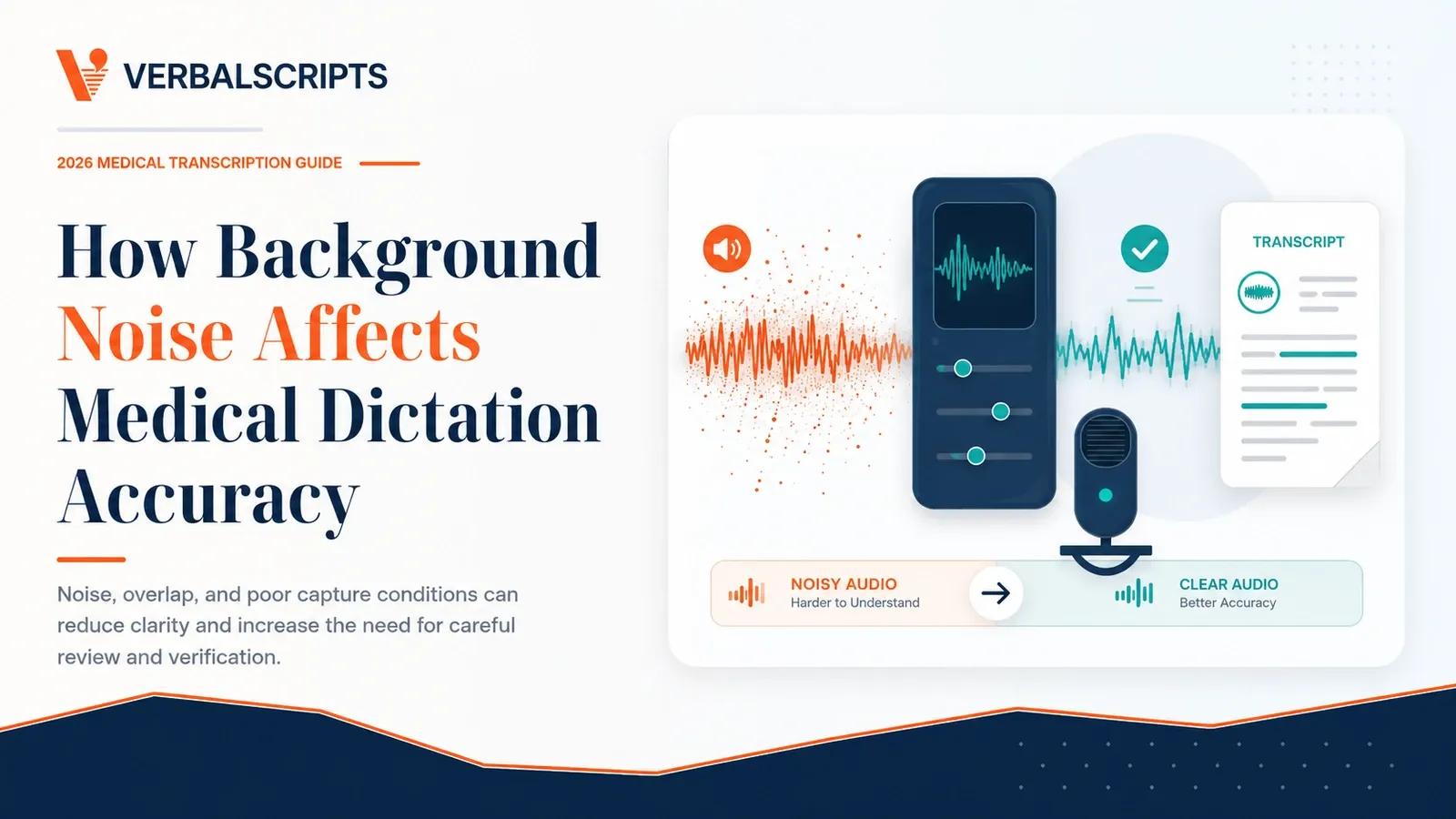
Learn how noise, echo, clipping, overlap, and poor microphone placement reduce medical dictation accuracy—and how clinicians can improve recordings.
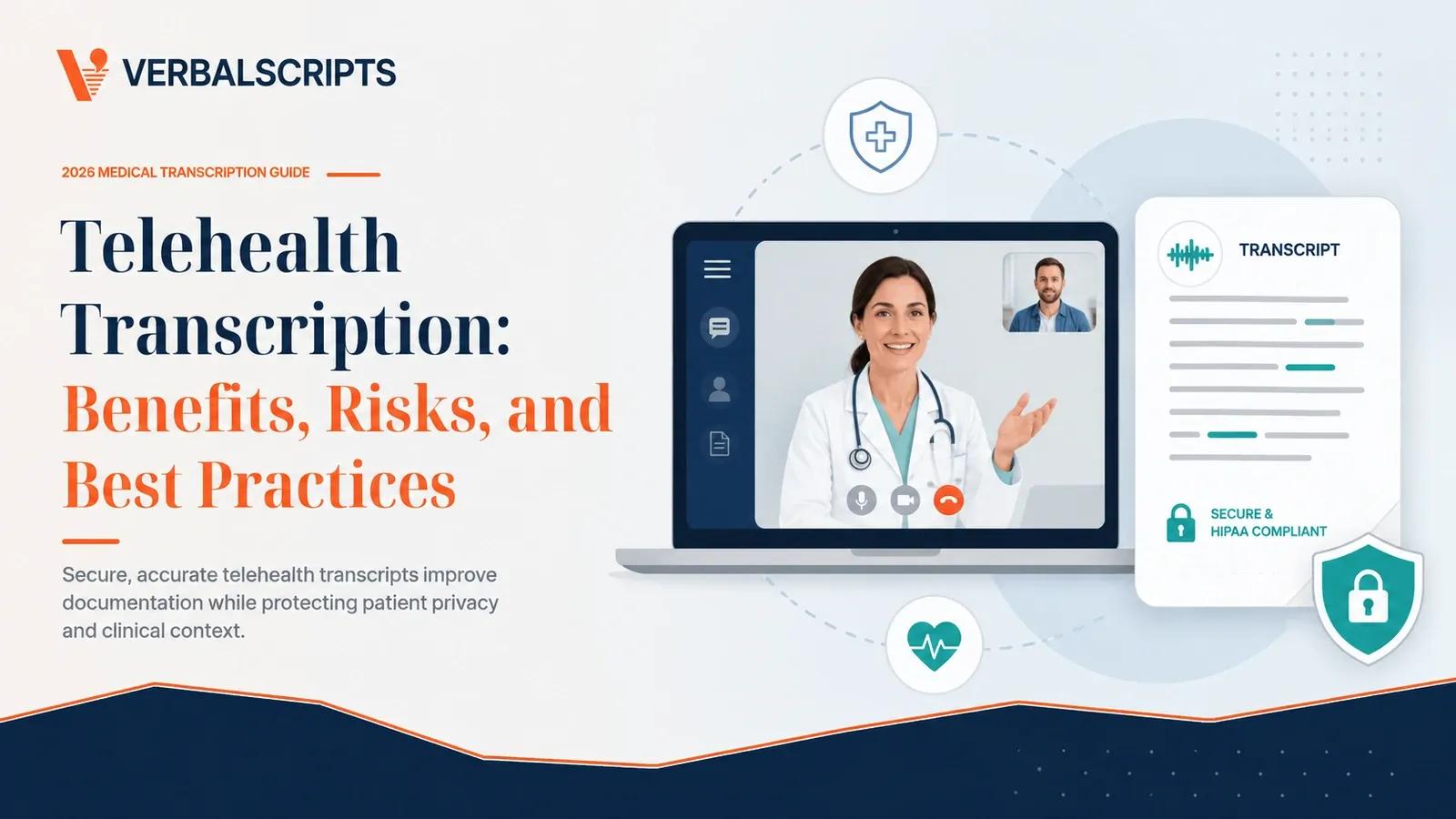
Understand telehealth transcription benefits, privacy risks, consent, HIPAA, speaker identification, human review, and secure vendor practices.
Explore the pros, cons, and accuracy of AI in medical transcription and why human oversight remains essential in healthcare.
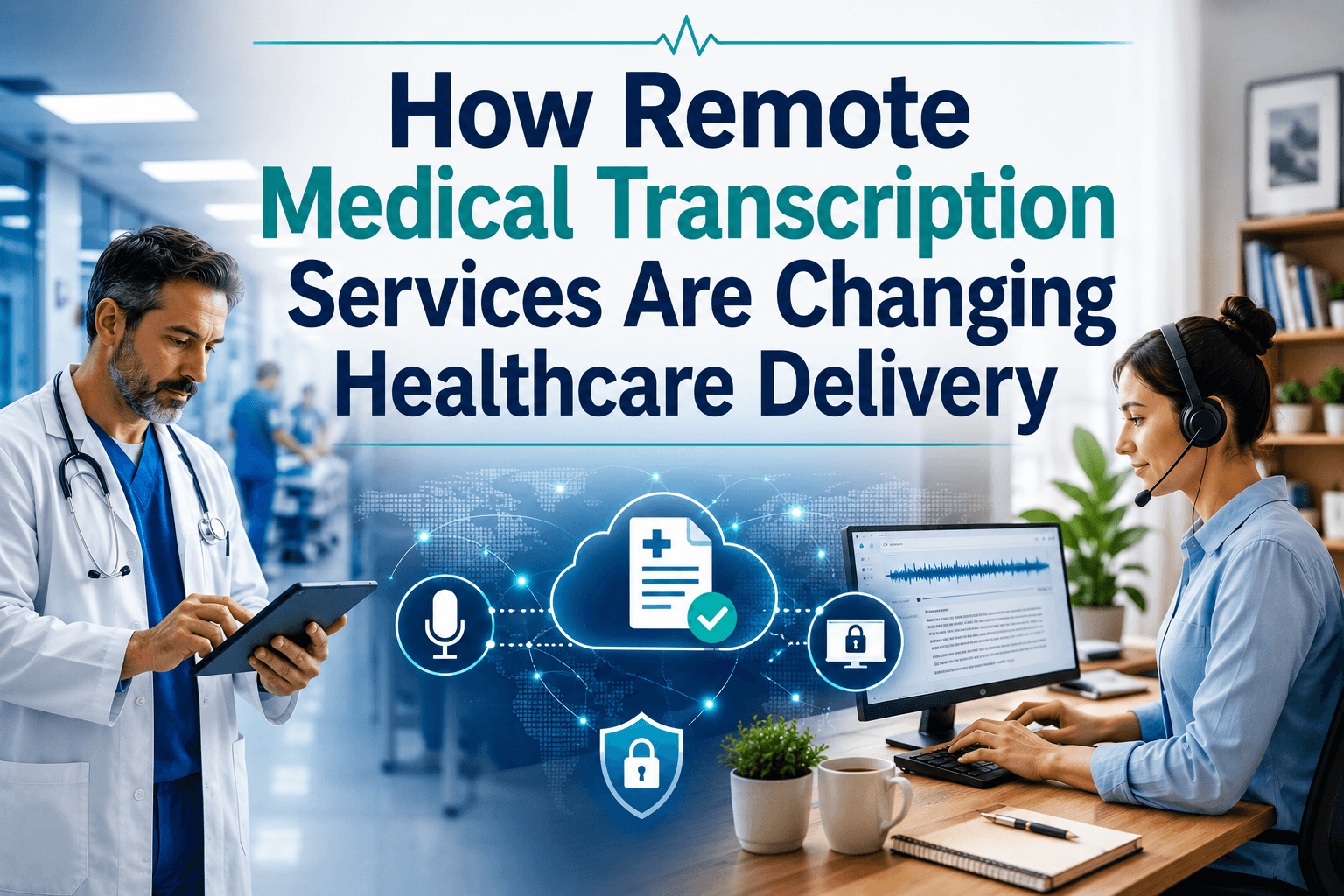
Discover how remote medical transcription services improve accuracy, reduce clinician burnout, cut costs, and enhance patient care.
Step-by-step guide to earning your medical transcription qualification, from training and certification to career opportunities.
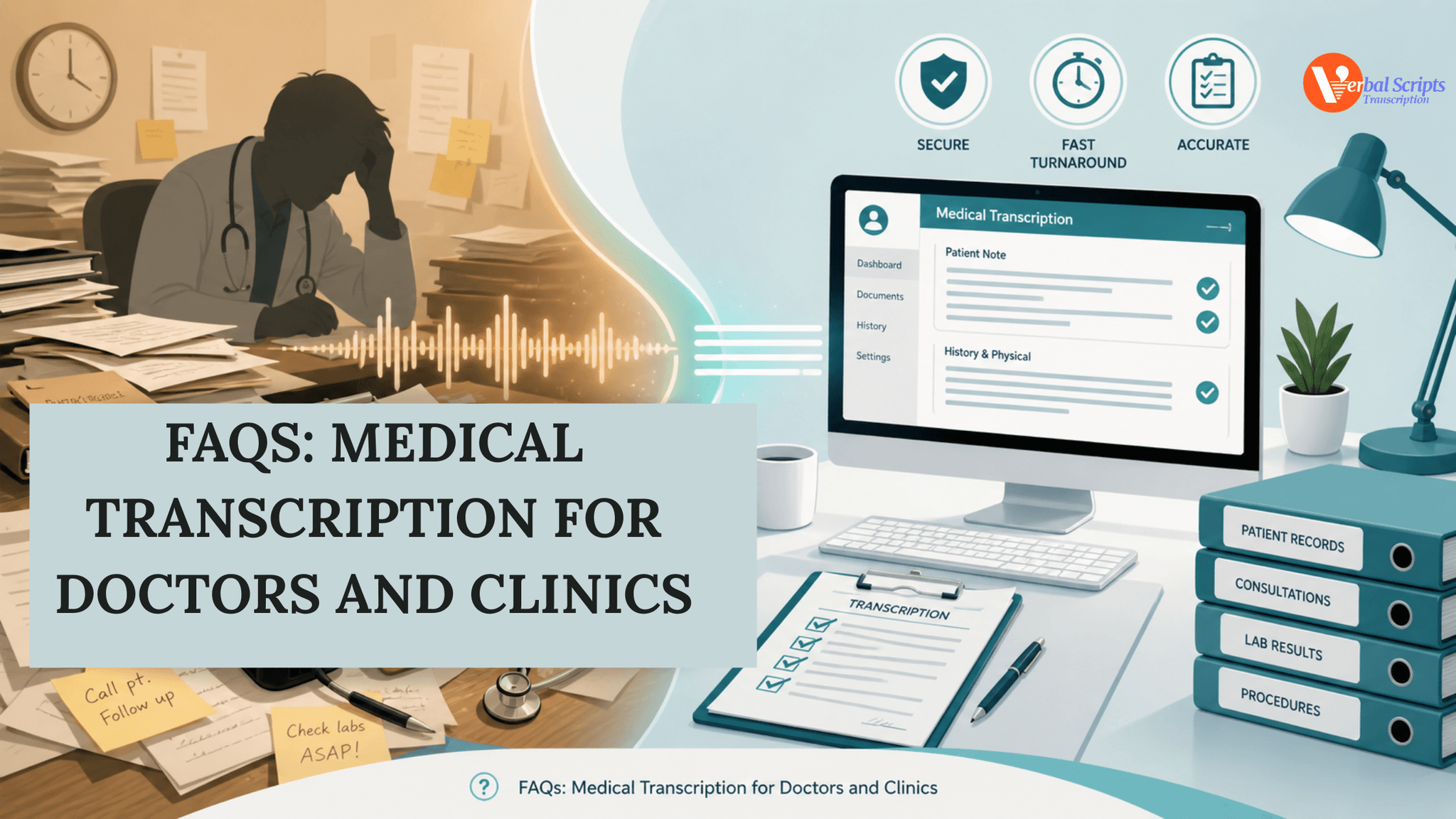
Medical transcription streamlines documentation, boosts accuracy, protects patient data, and helps doctors focus more on care instead of paperwork.
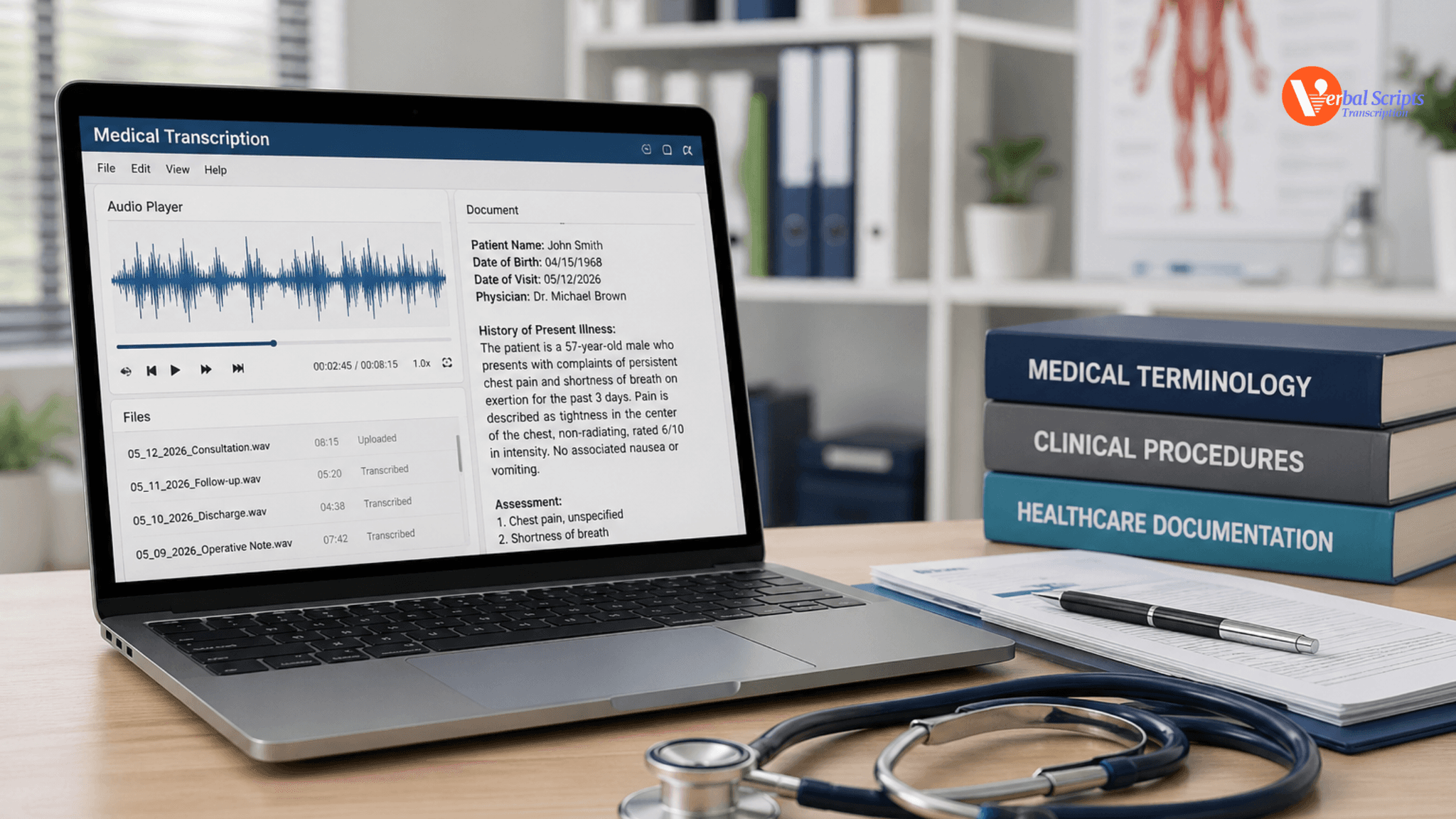
Guide to choosing medical transcription software in 2026, covering accuracy, speed, security, cost, and why human-based services stand out.